Comitato ombra

Perpendicolari al mondo che ci guarda storto
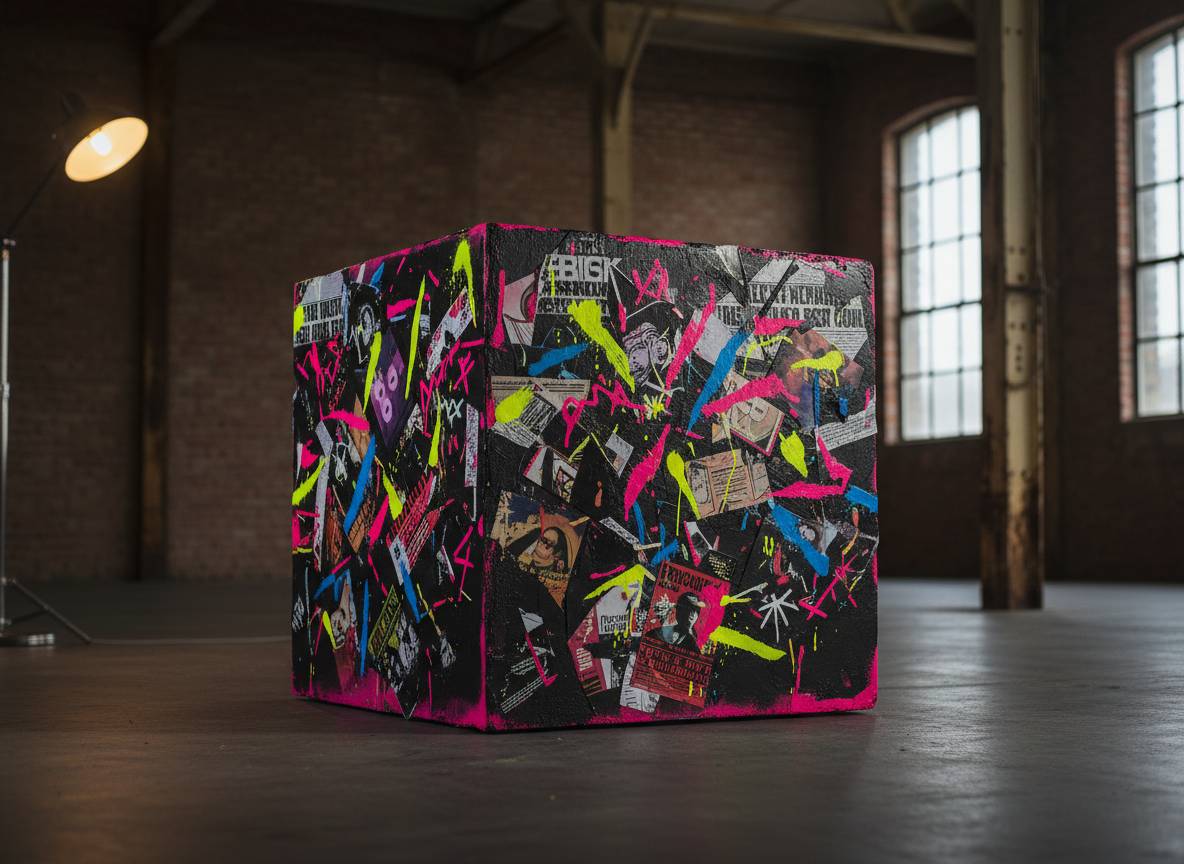
A bold, square concrete pedestal painted in distressed black and neon magenta sits in the center of a dim urban loft, its surfaces covered with layered fragments of album covers, manga panels, and tabloid headlines torn into sharp geometric shapes. Fluorescent spray-paint splatters slash across the collage like visual graffiti. Harsh side lighting from a single industrial lamp carves deep shadows and gleaming highlights along the edges, emphasizing the raw textures of paper, paint, and chipped cement. Shot at eye level with a shallow depth of field, the background recedes into a soft blur of exposed brick and metal beams, creating a photographic realism that feels confrontational, energetic, and unapologetically ‘teppismo culturale’—the square altar of cultural vandalism.
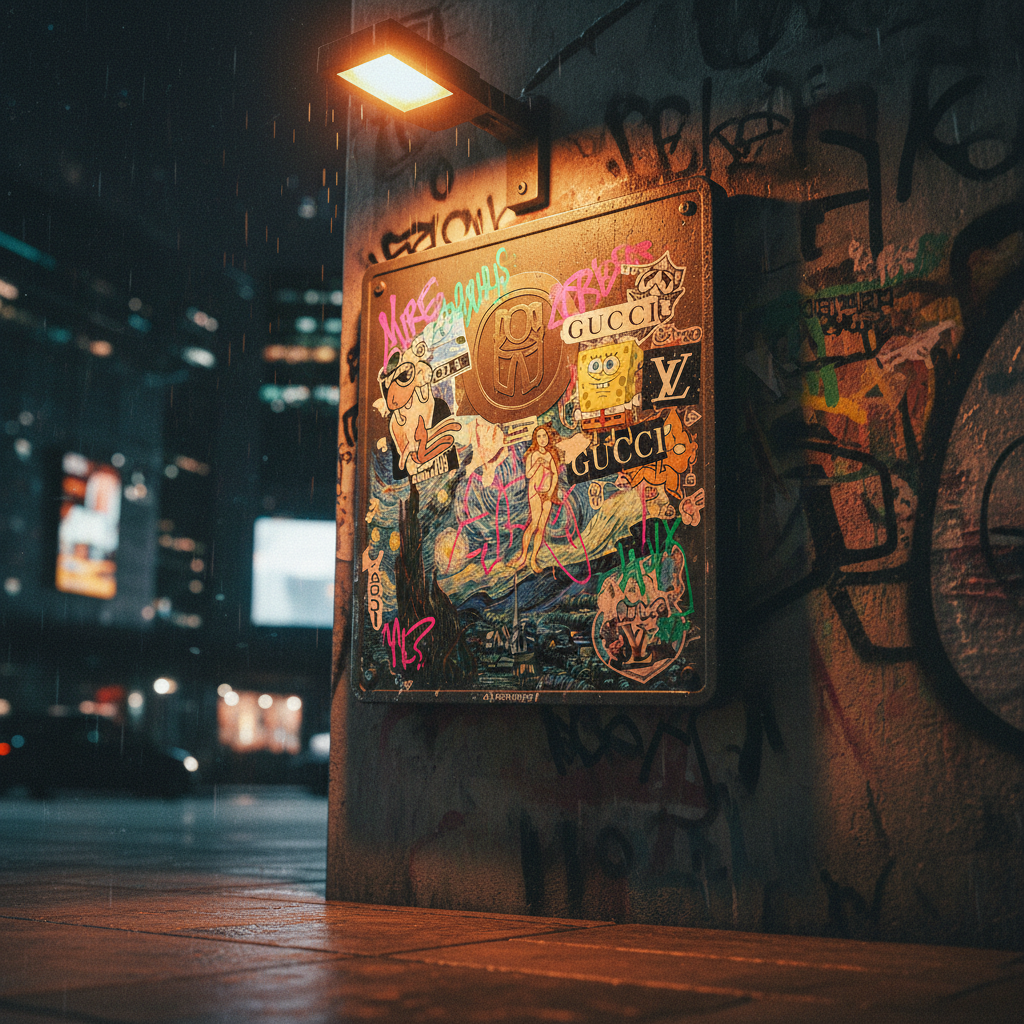
A battered metal street sign in the shape of a square hangs crooked on a graffiti-soaked concrete wall at night. The sign once displayed a clean cultural institution logo, now aggressively overpainted with clashing stickers of high art masterpieces, cartoon characters, luxury brand logos, and zine graphics, all partially ripped and overtagged with fluorescent marker scrawls. A single harsh sodium-vapor streetlight casts gritty, amber-toned illumination from above, creating dramatic shadows and a cinematic glow on the wet pavement below. Captured in photographic realism from a close, slightly tilted angle, with the background dissolving into bokeh city lights, the composition feels raw, rebellious, and electric—an urban manifesto of cultural hooliganism framed within one defiant square.

Teppismo culturale

Questo spazio definisce l’obiettivo ideologico di Banzai: una critica audace e creativa al modo in cui la cultura viene consumata, prodotta e distribuita. È una bussola di riferimento.
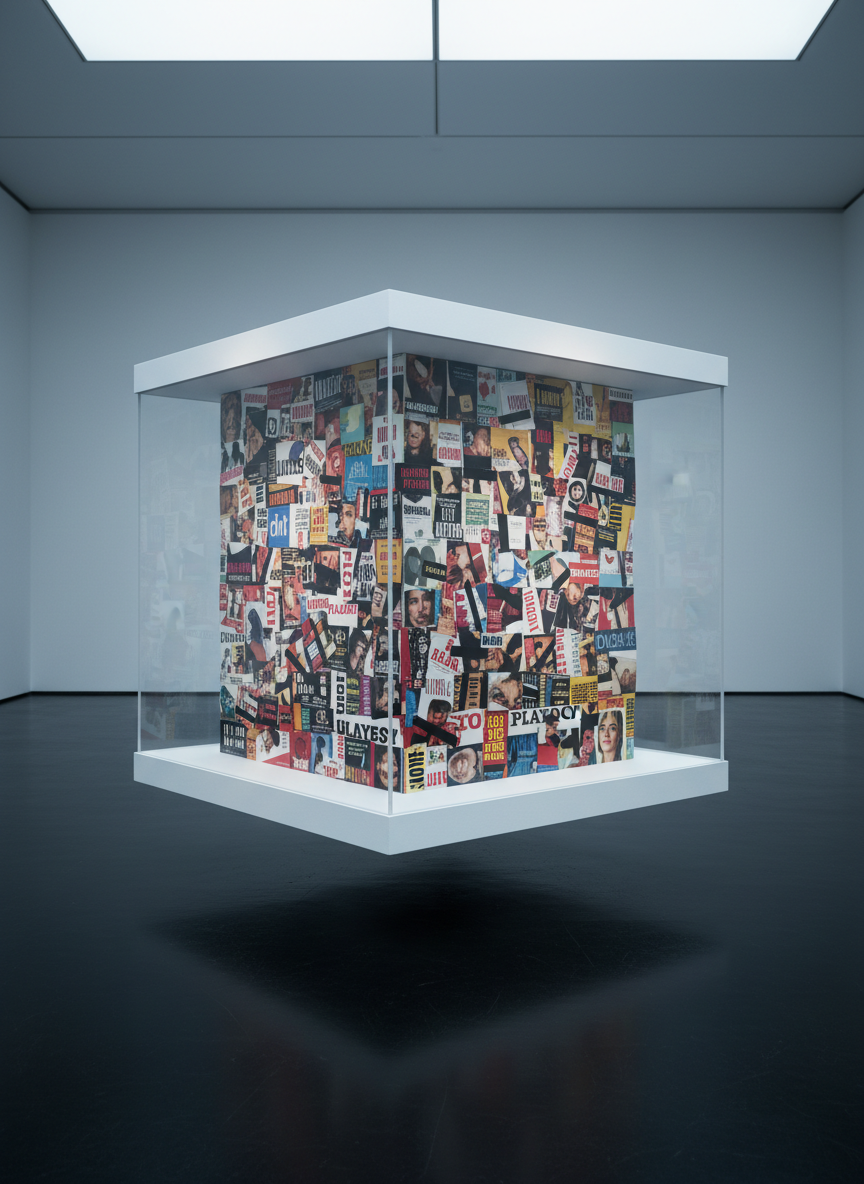
A perfectly symmetrical, white cube display case with razor-sharp edges floats slightly above a reflective black floor in a stark gallery space. Inside the cube, banned book covers, censored movie posters, and controversial magazine spreads are neatly sliced into exact squares and reassembled into a chaotic mosaic that defies its orderly container. Cold, overcast-style diffused light from an invisible skylight washes over the scene, creating soft reflections on the glass and a subtle halo around the cube. Photographic realism captures every printed letter and scuffed corner. Shot from a slightly low angle using the rule of thirds, the mood is tense, intellectual, and defiantly bold, embodying the paradoxical “quadrato del teppismo culturale” locked inside minimalist perfection.
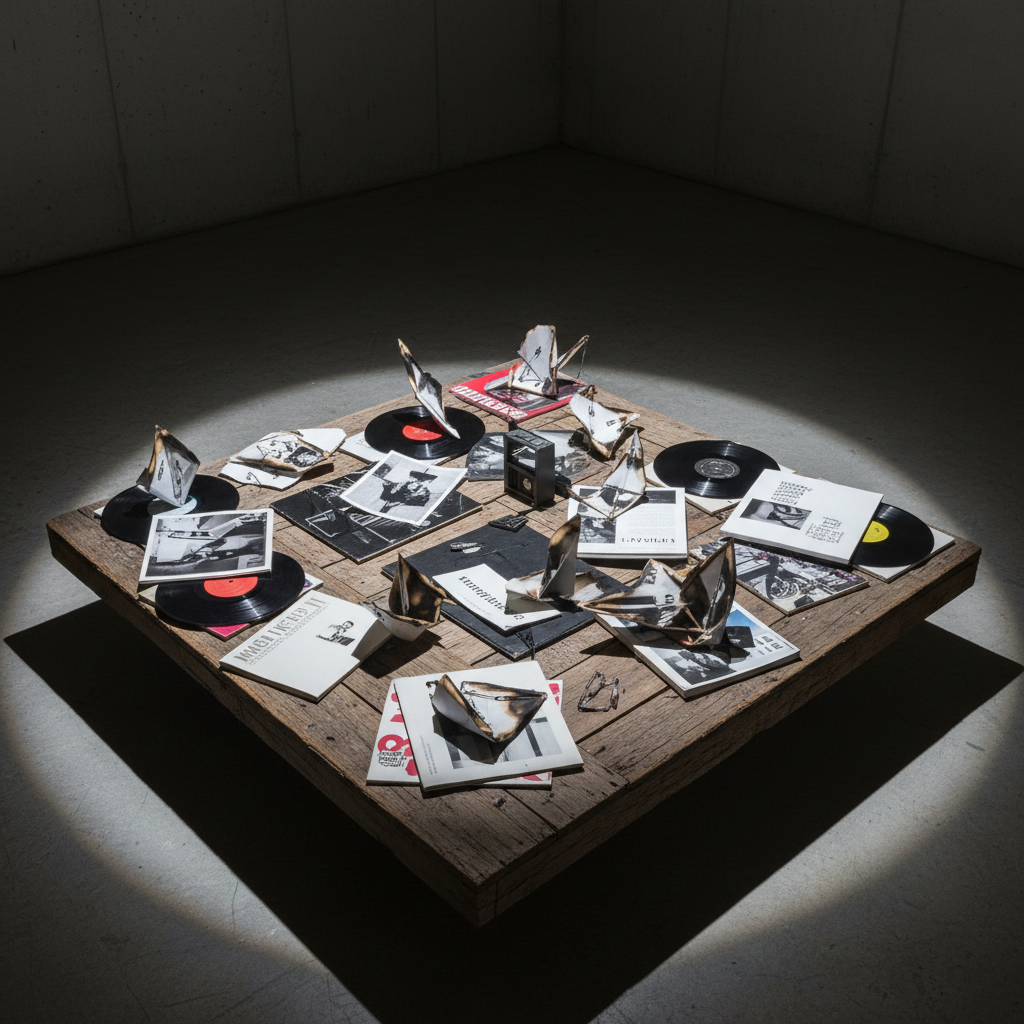
A low, square coffee table made from rough reclaimed wood stands in the middle of a stark concrete room, its surface transformed into a battlefield of cultural artifacts. Vinyl records, art catalogs, fashion lookbooks, underground comics, and academic journals are all sliced, folded, and stapled into aggressive origami-like structures, some burned at the edges or pierced by safety pins. A single overhead spotlight creates a hard-edged circle of white light, leaving the rest of the room in moody shadow, like an interrogation scene. Photographic realism emphasizes the grain of the wood, the fibers of the torn paper, and the glossy ink of printed images. Shot from a high, slightly off-center angle, the composition feels analytical yet chaotic, capturing the bold tension of “teppismo culturale” dissected on a square stage.
A bold, square concrete pedestal painted in distressed black and neon magenta sits in the center of a dim urban loft, its surfaces covered with layered fragments of album covers, manga panels, and tabloid headlines torn into sharp geometric shapes. Fluorescent spray-paint splatters slash across the collage like visual graffiti. Harsh side lighting from a single industrial lamp carves deep shadows and gleaming highlights along the edges, emphasizing the raw textures of paper, paint, and chipped cement. Shot at eye level with a shallow depth of field, the background recedes into a soft blur of exposed brick and metal beams, creating a photographic realism that feels confrontational, energetic, and unapologetically ‘teppismo culturale’—the square altar of cultural vandalism.